What is Holy Matrimony?
Holy Matrimony is the sacramental rite in which a man and a woman publicly make lifelong vows of love, fidelity, and mutual care before God and the Church, and receive God's blessing upon their union. It is one of the five sacramental rites recognised by the Anglican Church — rites which, while not classified among the two Gospel sacraments of Baptism and Eucharist, are nonetheless recognised as holy means of grace.
In Christian understanding, marriage is not merely a legal contract between two parties — it is a covenant: a binding, self-giving promise made before God, witnessed by the community of faith, and sustained by his grace. It reflects the covenant love of Christ for his Church and calls husband and wife to love one another with the same self-sacrificial devotion.
"Husbands, love your wives, as Christ loved the church and gave himself up for her."
— Ephesians 5:25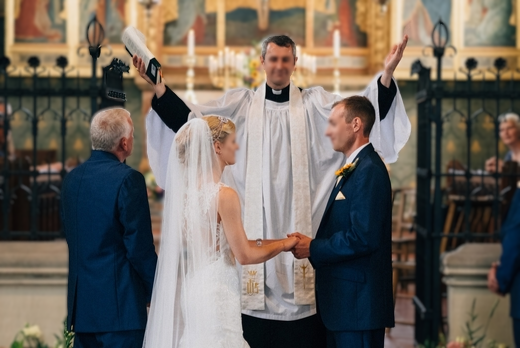
The Anglican Understanding of Marriage
The Anglican Prayer Book sets out three purposes for which marriage was ordained by God: the procreation and nurture of children; the mutual comfort and support of husband and wife in both prosperity and adversity; and the right ordering of human sexuality within the bonds of lifelong faithfulness.
Marriage in the Anglican Church is a public act — celebrated in the context of worship, in the presence of the gathered community — because the couple's covenant is not purely private. It is made before God and before his people, who are called to support, uphold, and pray for the newly married couple throughout their life together.
The Diocese of False Bay follows the rites of the Anglican Prayer Book of Southern Africa for the celebration of Holy Matrimony. All marriage services in the diocese must be conducted or authorised by the parish priest of one of the parties, and couples are encouraged to begin their preparation well in advance.
The Elements of the Marriage Rite
The Marriage rite in the Anglican tradition involves several essential components:
The Declaration of Intent
Each party publicly declares their free and willing consent to marry, without compulsion or impediment.
The Vows
The solemn promises of lifelong love, fidelity, and mutual service — made to one another before God.
The Giving of Rings
The exchange of rings as an outward symbol of the unending covenant being entered into.
The Blessing
The priest pronounces God's blessing upon the couple and their new life together.
The Joining of Hands
The priest joins the right hands of the couple — the ancient gesture of the dextrarum iunctio — as the vows are spoken.
The Eucharist
Where possible, Holy Matrimony is celebrated within the context of a Nuptial Eucharist, at which the couple receive Communion together for the first time as husband and wife.
Who May Marry in the Anglican Church?
Marriage in the Diocese of False Bay is available to any couple where at least one party is a baptised Anglican. The following conditions must be met:
Both parties must be free to marry
Neither party may be currently married to another living person. Those who have been previously married and divorced must speak with the parish priest, who will seek the Bishop's permission before a second marriage can be solemnised in church.
Consent must be free and genuine
Both parties must give their consent freely, willingly, and without any coercion or impediment. Any form of force, undue pressure, or legal incapacity invalidates the marriage.
Connection to a parish
At least one of the parties should ordinarily be a member of, or connected to, the parish in which the marriage is to be celebrated. The parish priest will advise if special permission is required for a marriage in a different church.
Preparing for Marriage
The Diocese of False Bay strongly encourages all couples to begin their marriage preparation well ahead of their intended date — ideally six months to a year in advance:
-
Contact your parish priestApproach your priest as soon as possible once you have decided to marry. He will advise on the legal and ecclesiastical requirements and help you plan your preparation.
-
Marriage preparation courseMost parishes require couples to attend a marriage preparation programme — a series of sessions covering communication, faith, family, finances, conflict, and the Christian vision of marriage.
-
Legal requirementsSouth African law requires a Notice of Intention to Marry to be submitted to the Department of Home Affairs. Your parish priest, who is a registered marriage officer, will guide you through this process.
-
Plan the serviceWork with your priest to plan the order of service, readings, music, and any other elements of the wedding. The service must follow the authorised rites of the Anglican Prayer Book.
-
The Marriage ServiceOn the day, the marriage is celebrated before God and the congregation. The couple exchange vows, rings are given, and the priest pronounces God's blessing on the union.
What to Bring
- Valid identity documents for both parties (South African ID or passport)
- Proof of Baptism for the Anglican party (or both parties, if both are Anglican)
- Decree of divorce or death certificate of former spouse, if previously married
- Completed Notice of Intention to Marry (DHA-132) — your priest will advise on timing
- Completion of the parish marriage preparation programme
Marriage and the Life of Faith
Holy Matrimony does not end at the altar — it begins there. The vows exchanged in church are the foundation of a lifelong journey of love and growth. The Diocese of False Bay encourages all married couples to remain rooted in the worshipping community, to pray together, and to seek the Church's support when the challenges of married life arise.
The parish is a family for married couples — a community that celebrates with them in joy and supports them in difficulty. Couples experiencing difficulties in their marriage are encouraged to speak with their parish priest, who can offer counsel or refer them to appropriate professional support.
"Love is patient, love is kind. It does not envy, it does not boast, it is not proud… Love never fails."
— 1 Corinthians 13:4, 8