What is Christmastide?
Christmastide — commonly called "the Twelve Days of Christmas" — is the festal season of the Church's year that begins at the First Eucharist of Christmas on Christmas Eve (24 December) and concludes at the close of the Feast of the Epiphany on 6 January. It is a season of sustained joy and celebration in response to the mystery of the Incarnation: the eternal Son of God becoming flesh and dwelling among us.
The world tends to treat Christmas as a single day and then move on. The Church, by contrast, has always celebrated the Nativity of Our Lord as a twelve-day season — a sustained feasting on the mystery of God made man. Clergy are encouraged to help their congregations understand and inhabit the full richness of Christmastide, rather than packing up and moving on before the season has truly begun.
"For God so loved the world that he gave his one and only Son, that whoever believes in him shall not perish but have eternal life."
— John 3:16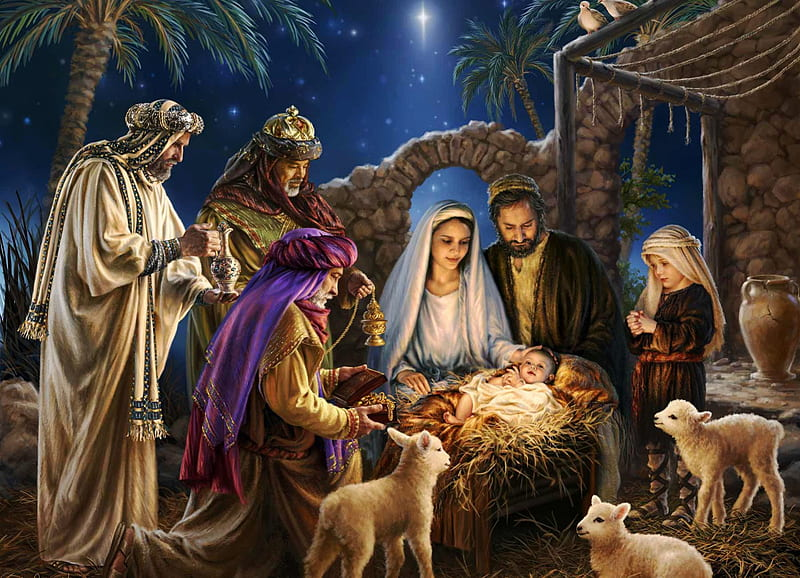
Liturgical Colour: White and Gold
The liturgical colour of Christmastide is white — the colour of light, purity, joy, and the glory of God. Gold may be used as an enhancement or alternative, particularly for the principal services of Christmas Day and the Feast of the Holy Name. White vestments, frontals, and hangings replace the purple of Advent at the First Eucharist of Christmas and remain in place throughout the season.
White
The principal colour of the season — joy, light, and the glory of the Incarnation
Gold
May be used for principal feasts; especially fitting for Christmas Day and Epiphany
Red
St Stephen's Day (26 Dec) and Holy Innocents (28 Dec) — martyrs' feasts within the season
The Feasts of Christmastide
The Twelve Days are not blank feasting days — they are punctuated by significant feasts that the Church has placed within the Christmas season, each offering a different facet of the mystery of the Incarnation and its consequences for the world.
The Nativity of Our Lord
The central celebration of the season. Three traditional masses: at midnight, at dawn, and during the day — each with their own proper readings.
St Stephen, Deacon & Martyr
The first martyr is placed immediately after Christmas: the cost of the Incarnation made plain. Red vestments. Acts 7:55–60.
St John, Apostle & Evangelist
The beloved disciple and author of the Fourth Gospel — whose Prologue is the great Christmas proclamation. White vestments.
The Holy Innocents
The children slain by Herod — the shadow of the Cross falls even over the manger. Red vestments. Matt. 2:13–18.
The Holy Family
Celebrated on the Sunday between Christmas and New Year (or 30 December if no Sunday falls there). The family of Nazareth as the pattern of human family life.
The Holy Name of Jesus
The Circumcision and Naming of Christ. The name "Jesus" — Yeshua, "God saves" — proclaimed for the first time. A feast of tender intimacy and deep theology.
Celebrating the Season Well
One of the greatest pastoral challenges of Christmastide is helping congregations resist the cultural pressure to treat Christmas as over on 25 December. The Church's counter-cultural witness is to continue feasting when the world has stopped — to keep the lights burning and the carols singing through to Epiphany.
-
Keep the crib in placeThe nativity scene should remain in the church throughout the Twelve Days, and ideally until the Feast of the Presentation (2 February). Do not pack it away on Boxing Day.
-
Mark the subsidiary feastsEven a brief weekday Eucharist or evening prayer for St Stephen, St John, and the Holy Innocents enriches the season and reminds the congregation that these are genuine feasts, not afterthoughts.
-
Preach through the seasonEach Sunday and feast within Christmastide offers distinct and rich preaching material — do not repeat the same Christmas homily. The Prologue of John (used at the principal Christmas Eucharist) alone deserves a sermon of its own.
-
Use the full range of Christmas hymnodyMany Christmas carols are written for specific moments in the season — "O Come All Ye Faithful" for Christmas Day itself, "The First Nowell" for the Epiphany themes. Do not exhaust all the carols on Christmas Eve alone.
-
Prepare for EpiphanyThe Feast of the Epiphany (6 January) is the culmination of the season and deserves significant preparation — it is not an anticlimax but a climax. The Magi's arrival completes the Christmas story for the Gentile world.
Preaching in Christmastide
The great temptation of preaching at Christmas is to remain at the level of sentiment — the warmth of the stable, the cuteness of the infant, the family atmosphere. The Church's proclamation goes far deeper: the Word became flesh. The eternal Logos, through whom all things were made, has entered his own creation. This is an ontological earthquake.
The Christmas Proclamation (Exsultet / Kalenda)
Many parishes use the traditional Christmas Proclamation — sometimes called the Kalenda — at the beginning of the Midnight Mass or principal Christmas Eucharist. This ancient text situates the birth of Christ within the whole sweep of salvation history, from creation to the fullness of time. It is deeply recommended as a way of opening the season with the full weight of what is being celebrated.
The Prologue of John (John 1:1–14)
The Gospel appointed for the principal Christmas Eucharist in all three years of the lectionary is the Prologue of John's Gospel. This is the Church's deepest theological statement about the Incarnation, and it deserves unhurried attention. Preachers are encouraged to sit with its language — Word, Light, Darkness, Life, Grace, Truth, Flesh — and to resist the urge to explain it away. Let it stand in its strangeness and its majesty.
"In the beginning was the Word, and the Word was with God, and the Word was God... The true light that gives light to everyone was coming into the world."
— John 1:1, 9Hymnody & Music
Christmastide has the richest hymnodic tradition of any season of the liturgical year. The following is a curated selection with notes on their appropriate use within the season:
- "O Come All Ye Faithful" (Adeste Fideles) — The great processional hymn of Christmas Day itself. Best reserved for 25 December and not used in Advent.
- "Hark! The Herald Angels Sing" — Rich Incarnation theology in verse. Wesley's text is one of the finest theological summaries of Christmas in the English language.
- "Of the Father's Love Begotten" (Corde Natus) — A 4th-century Latin hymn of extraordinary theological depth. Appropriate for Christmas Day and throughout the season.
- "In the Bleak Midwinter" — Rossetti's poem set by Holst or Darke. Deeply meditative; excellent for Christmastide evening worship.
- "See Amid the Winter's Snow" — Caswall's text is one of the finest reflective Christmas carols for the days after Christmas Day itself.
- "The First Nowell" — More properly an Epiphany carol, following the journey of the Magi; best used in the latter days of Christmastide leading toward 6 January.
Resources for Clergy
The following resources are available to clergy of the Diocese for planning and preparing Christmastide worship. Contact the Diocesan office for further assistance.
- Christmas Proclamation (Kalenda) — Printable Text The traditional proclamation of the birth of Christ, formatted for proclamation at Midnight Mass
- Lectionary Readings: Christmastide Years A, B & C All propers for Christmas Eve, Christmas Day, the subsidiary feasts, and the Sunday in the Octave
- Order of Service: Midnight Mass / Christmas Carol Service A template order of service for the principal Christmas Eucharist and for a carol service
- Intercessions for the Twelve Days Responsive intercessions for each of the principal feasts within Christmastide
- Christmastide Parish Devotional Handout A short daily reflection guide for parishioners to use throughout the Twelve Days