What is the Anointing of the Sick?
The Anointing of the Sick — also known as Holy Unction — is the sacramental rite in which a priest anoints a sick or suffering person with holy oil, lays hands upon them, and prays for their healing, comfort, and peace. It is one of the five sacramental rites of the Anglican Church and has its roots in the earliest practice of the apostles, who anointed many sick people and healed them.
Holy Unction is not a rite of last resort or a sign that death is near — it is a rite of healing and restoration, offered to any Christian who is ill, whether the illness is of body, mind, or spirit. It is the Church's act of bringing the sick person into the healing presence of Christ, trusting that God — in his mercy — will work his will through prayer, anointing, and the laying on of hands.
"And the prayer offered in faith will make the sick person well; the Lord will raise them up. If they have sinned, they will be forgiven."
— James 5:15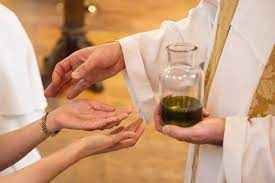
The Anglican Understanding of Holy Unction
The Anglican tradition has consistently maintained the Ministry of Healing — including anointing with oil — as a genuine and important part of the Church's life and pastoral care. The Anglican Prayer Book provides rites for the Laying on of Hands and Anointing, for Communion of the Sick, and for Ministry at the Time of Death.
Anglicanism does not teach that anointing guarantees physical recovery. Rather, the rite entrusts the sick person wholly to God — their body, mind, and spirit — and asks for his healing according to his will and in his time. That healing may be physical restoration, or it may be the peace, courage, and spiritual wholeness to face illness with faith. Both are genuine gifts of God's grace.
In the Diocese of False Bay, the Ministry of Healing is an important part of pastoral care. Parish priests are available to visit the sick at home, in hospital, or in a care facility, to pray, anoint, and administer Communion to those who are unable to attend church.
The Elements of Holy Unction
The rite of Anointing in the Anglican tradition includes several essential elements:
The Oil
Olive oil, blessed by the Bishop at the Chrism Eucharist or by the priest, is the outward sign of the Spirit's healing grace and God's mercy.
The Laying on of Hands
The priest lays hands on the sick person's head, as a sign of blessing, prayer, and the transmission of God's healing power.
The Prayer of Faith
Prayers are offered for healing, strength, peace, and — above all — God's will to be done in and through the sick person's suffering.
The Anointing
The priest anoints the person on the forehead (and often the palms) with blessed oil, in the name of the Holy Trinity.
Communion of the Sick
Where possible, the sacrament of unction is accompanied by Holy Communion — the Bread of Life — which nourishes the sick person for their journey.
Confession & Absolution
The opportunity to make a private Confession and receive absolution is often offered alongside anointing, bringing peace of conscience alongside physical care.
Who May Receive Holy Unction?
The seriously ill
Any baptised Christian who is seriously ill — whether in hospital, at home, or in a care facility — may request anointing. Family members and friends are encouraged to contact their parish priest promptly when a loved one is seriously ill, so that the ministry of the Church can be offered in a timely way.
Those facing surgery or serious diagnosis
Holy Unction is also appropriately offered before major surgery, at the time of receiving a serious diagnosis, or at the beginning of a long and difficult course of treatment. It is not necessary to wait until a person is gravely ill — the rite brings strength and comfort at any point of serious illness or anxiety.
The dying
For those who are dying, the full ministry of the Church — Confession and Absolution, Holy Unction, and Viaticum (Communion given to the dying) — is available. This ministry, sometimes called the Last Rites, is the Church's final act of pastoral care and sacramental love for a departing soul. If death may be imminent, family members should contact the parish priest immediately.
Those suffering mental or spiritual illness
The anointing of the sick is not limited to physical illness. Those suffering from severe depression, mental illness, acute anxiety, or deep spiritual distress may also receive Holy Unction, asking God's healing and peace for the whole person — body, mind, and spirit.
How to Arrange Holy Unction
-
Contact your parish priestCall or message your priest as soon as you know that you or a loved one needs this ministry. If the situation is urgent, say so — priests will always prioritise a dying or gravely ill person.
-
Arrange a time and placeThe priest will come to the sick person — at home, in hospital, in a hospice, or wherever they are. The rite can be celebrated simply and quietly, or with family and friends present.
-
Prepare a simple spaceIf at home, it helps to have a small table with a clean cloth, a candle if possible, and a glass of water. The priest will bring the oil and anything else needed for the rite.
-
The rite itselfThe priest will pray, lay hands on the sick person, and anoint them with oil. If the person is able, they may make a Confession beforehand and receive Holy Communion. The whole rite takes approximately 20–30 minutes.
-
Ongoing pastoral careAfter the anointing, the priest will continue to offer pastoral support, regular visits, and further Communion as needed. The sick person remains in the prayers of the whole parish community.
What to Know Beforehand
- Holy Unction is not "the last rites" in the sense of being reserved for the dying — it is a rite of healing for the sick at any stage of illness
- You do not need to be a member of the Diocese of False Bay — any baptised Christian in need may request this ministry
- The rite may be received more than once — there is no limit on how often a person may be anointed
- Family and loved ones are welcome to be present, and the priest will pray with them too
- If a person is unconscious or unable to speak, the rite may still be administered — God hears the prayers of the Church on their behalf
"The Lord sustains them on their sickbed and restores them from their bed of illness."
— Psalm 41:3Healing Prayer in Public Worship
In addition to the private ministry to the sick, many parishes in the Diocese of False Bay offer a public Ministry of Healing within the Sunday Eucharist or at special healing services. At these services, members of the congregation may come forward to receive the laying on of hands and prayer — for themselves or on behalf of those they love.
This public ministry of healing is a powerful sign of the Church's calling to be, in the words of scripture, a community where the sick are cared for and the broken are made whole in the name of Jesus Christ.