What is Holy Week?
Holy Week is the final week of Lent — the seven days from Palm Sunday to Holy Saturday — in which the Church enters most deeply into the mystery of Christ's Passion, Death, and Burial. It is the most solemn and the most liturgically rich week of the entire year: every day carries its own liturgical weight, its own proper readings, and its own irreplaceable place in the story of our salvation.
The Church does not merely remember these events from a safe distance. In the liturgies of Holy Week, the congregation is drawn into the events themselves — into the upper room, into the garden, to the foot of the Cross, and to the sealed tomb. The goal of Holy Week liturgy is not information but formation: to let the story do its work in the hearts and bodies of those who pray it.
"He humbled himself by becoming obedient to death — even death on a cross! Therefore God exalted him to the highest place and gave him the name that is above every name."
— Philippians 2:8–9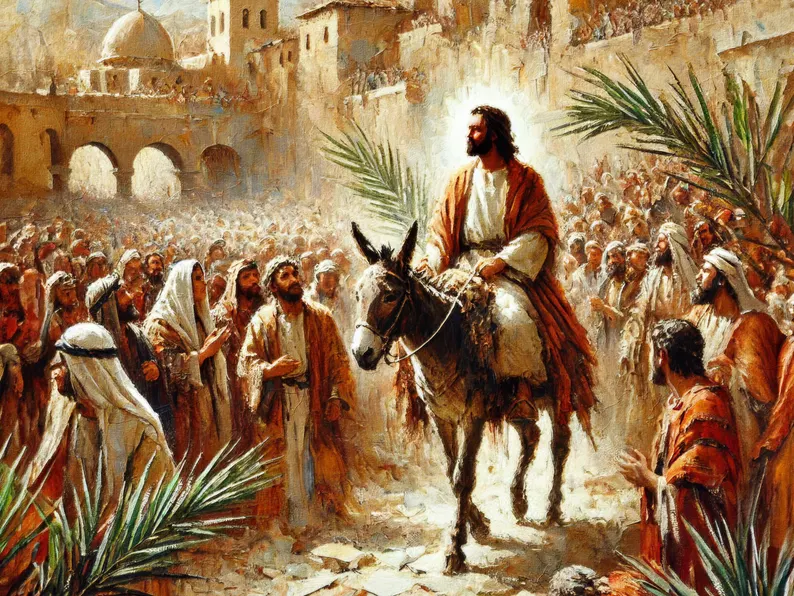
Liturgical Colours of Holy Week
Red
Palm Sunday (Liturgy of the Palms) and Good Friday — the blood of the King and the Passion of Christ
White
Maundy Thursday — the feast of the Last Supper; the white of celebration and of the body of Christ
Stripped / Bare
After Maundy Thursday: altars stripped, sanctuary bare. Good Friday: no vestment colour — the liturgy is stark.
White or Gold
Easter Vigil (after the Exsultet) and throughout Eastertide — the blaze of resurrection glory
The Days of Holy Week
Each day of Holy Week carries its own significance. The three central days — Maundy Thursday, Good Friday, and Holy Saturday — form the Paschal Triduum (the "Three Days"), which is the beating heart of the entire liturgical year. The Triduum is not three separate events but a single continuous liturgical action that begins at the Evening Eucharist on Maundy Thursday and concludes with Evening Prayer on Easter Day.
Palm Sunday through Holy Wednesday
Palm Sunday opens the week with the Liturgy of the Palms — a procession of acclamation — followed immediately by the solemn reading of the full Passion narrative. The congregation moves in a single service from "Blessed is he who comes in the name of the Lord" to "Crucify him!" This jarring transition is not an accident; it is the theological point. Monday, Tuesday, and Wednesday of Holy Week are sometimes called the "Monday, Tuesday, and Wednesday of Holy Week" and may be observed with services focused on the Temple controversies and the anointing at Bethany — though in practice many parishes hold their main services on the Triduum days only.
The Paschal Triduum
The Triduum is the summit of the entire liturgical year. Every other season leads toward it; every other season flows from it. Clergy are strongly encouraged to celebrate all three great liturgies of the Triduum, even in small parishes — and to invest the most preparation, the most care, and the most pastoral energy of the year into these three services.
Maundy Thursday
The Evening Eucharist of the Lord's Supper
The evening Eucharist on Maundy Thursday commemorates the institution of the Lord's Supper in the upper room. It is a service of extraordinary intimacy and tenderness — the night before the betrayal, when Jesus took bread and cup and gave himself to his disciples.
- The Washing of Feet — The mandatum (from which "Maundy" derives): the priest washes the feet of members of the congregation, enacting Jesus' own act in John 13. This is one of the most powerful liturgical actions of the year; clergy should not omit it.
- The Agape (Love Feast) — Some parishes include a simple shared meal before or after the liturgy, drawing on the early Church's practice and deepening the communal dimension of the evening.
- The Stripping of the Altar — After the final Eucharist of the evening, the altar is stripped of all its cloths, candles, and ornaments in silence — often to the singing of Psalm 22 ("My God, my God, why have you forsaken me?"). The sanctuary is left utterly bare.
- The Watch — After the stripping, the Blessed Sacrament is carried in procession to an altar of repose, and the congregation is invited to watch and pray through part of the night — entering into Gethsemane with Christ.
Good Friday
The Liturgy of the Passion and Death of the Lord
Good Friday is the only day in the year on which the Eucharist is not celebrated. The Church stands at the foot of the Cross in silence and simplicity. The service has three distinct parts:
- The Liturgy of the Word — Isaiah 52–53 (the Suffering Servant), Psalm 22, Hebrews 4, and the Passion according to John (chapters 18–19) — the only Gospel appointed for Good Friday in all three years.
- The Solemn Intercessions — The ancient Good Friday bidding prayers: for the Church, for the world, for the Jewish people, for those who do not believe, for those in special need. The fullest intercession of the year.
- The Veneration of the Cross — A cross is brought into the church and the congregation is invited to come forward in silence to kneel, touch, or kiss it. The Reproaches (Improperia) may be sung: "O my people, what have I done to you?"
- Communion from the Reserved Sacrament — The pre-consecrated elements reserved from Maundy Thursday are distributed to the people. This is called the Mass of the Pre-Sanctified.
After the service the church is left in silence. The altar remains bare, no candles burn, no bells ring. The fast continues through Holy Saturday.
Holy Saturday
The Great Sabbath — the day of the sealed tomb
Holy Saturday is a day of profound liturgical silence. There is no Eucharist and no public office beyond Morning Prayer. The Church waits at the tomb. Christ lies buried. It is the longest day of the year for the Christian soul — the day of God's hiddenness, of loss, of the silence between death and resurrection.
The day is not empty, however. It is a day for:
- Final preparations for the Easter Vigil — lighting the fire, preparing the Exsultet, rehearsing the liturgy
- The final preparation and instruction of those to be baptised at the Vigil
- Individual prayer, fasting, and silent waiting — the most countercultural thing the Church can do in a busy world
- The ancient tradition of the Harrowing of Hell — Christ's descent to the dead — which is the subject of Holy Saturday's meditation (1 Peter 3:18–20; 4:6)
The Easter Vigil
The Mother of All Vigils — the Night of Nights
The Easter Vigil is the greatest liturgy of the Christian year. It is celebrated after nightfall on Holy Saturday and before sunrise on Easter Sunday — in the darkness, at the threshold of resurrection. It has four great movements:
- The Service of Light — A fire is kindled in darkness outside the church. The Paschal Candle is lit and carried into the darkened building. "The Light of Christ." Three times: Lumen Christi. Deo gratias. The Exsultet — the great Easter proclamation — is then sung or said: the most beautiful text in Christian liturgy.
- The Liturgy of the Word — Up to twelve Old Testament readings (creation, Abraham, the Exodus, Isaiah, Ezekiel) trace the entire sweep of salvation history. At minimum, the Exodus reading (the crossing of the Red Sea) must be included. After each reading, a psalm and a collect.
- The Liturgy of Baptism — The font is blessed; those preparing for baptism are baptised; the whole congregation renews its baptismal vows. The Alleluia — suppressed since Ash Wednesday — is sung for the first time. The bells ring. Lights blaze.
- The Liturgy of the Eucharist — The first Easter Eucharist. Vestments change to white or gold. The Gloria is sung. The Resurrection Gospel is proclaimed. The feast of feasts begins.
The Easter Vigil should be celebrated in full, in darkness, and with proper preparation. It is not an optional extra — it is the original and supreme Easter service, to which the Sunday morning Eucharist is properly a continuation.
Preaching in Holy Week
Holy Week demands a particular kind of preaching: spare, concrete, and willing to let the silence speak. The temptation is to explain what is happening; the calling is to make space for it to happen. The great homilists of Holy Week — Augustine, John Chrysostom, the author of the ancient Homily for Holy Saturday — were not explicators but companions, walking their congregations through the darkness with a single lamp.
For Good Friday in particular: resist the urge to preach a long sermon. The Cross does not require defence or explanation. Read the Passion of John in full. Let the ancient Solemn Intercessions carry their weight. Offer the Veneration of the Cross in silence. Sometimes the most powerful homily for Good Friday is the shortest — or none at all.
"When Jesus had received the wine, he said, 'It is finished.' Then he bowed his head and gave up his spirit."
— John 19:30Easter Sunday & the Great Fifty Days
Easter is not a single day but a season of fifty days — from Easter Sunday to the Day of Pentecost. The Church Fathers spoke of the whole of Eastertide as "one great Sunday," a continuous feast in which every day is touched by the resurrection. In this the Church deliberately mirrors the joy of the disciples who, having lived through the horror of Holy Week, found themselves in the astonishing and expanding light of the risen Christ.
The Alleluia — silent throughout Lent — rings out through all fifty days. The Exsultet's proclamation, "This is the night," echoes through every Eucharist of the season. The Church does not rush past Easter; it inhabits the resurrection as its permanent address.
Easter Sunday — The Feast of Feasts
The principal feast of the entire Christian year
Easter Sunday morning is the continuation and climax of the Easter Vigil. For those who could not attend the Vigil, it is the moment of first encounter with the resurrection. The principal service should be celebrated with every possible resource of music, flowers, light, and festive joy — not as superficial decoration but as the outward expression of the gospel proclamation: Christ is risen. He is risen indeed. Alleluia!
The Easter Gospel in all three years is drawn from the resurrection narratives — the empty tomb (Year A: Matthew 28; Year B: Mark 16 / John 20; Year C: Luke 24 / John 20). Many parishes also use the Easter sequence Victimae Paschali Laudes ("Christians, to the Paschal Victim"), one of the oldest and most beautiful liturgical texts of the season.
Where there is an Easter Vigil, the Sunday morning service is properly the stational Mass of the Day — the public proclamation of the resurrection to all who gather. Both services are needed and neither replaces the other.
Liturgical Colour: White (and Gold)
The colour of Eastertide is white — the colour of resurrection, of the angel at the tomb, of the transfigured Christ, of baptismal garments, and of the wedding feast of the Lamb. Gold may be used as an enhancement, particularly on Easter Day and Ascension. The season is to be as luminous as the Church can make it — an unambiguous visual proclamation that death has been defeated.
"He is not here; he has risen, just as he said. Come and see the place where he lay. Then go quickly and tell his disciples."
— Matthew 28:6–7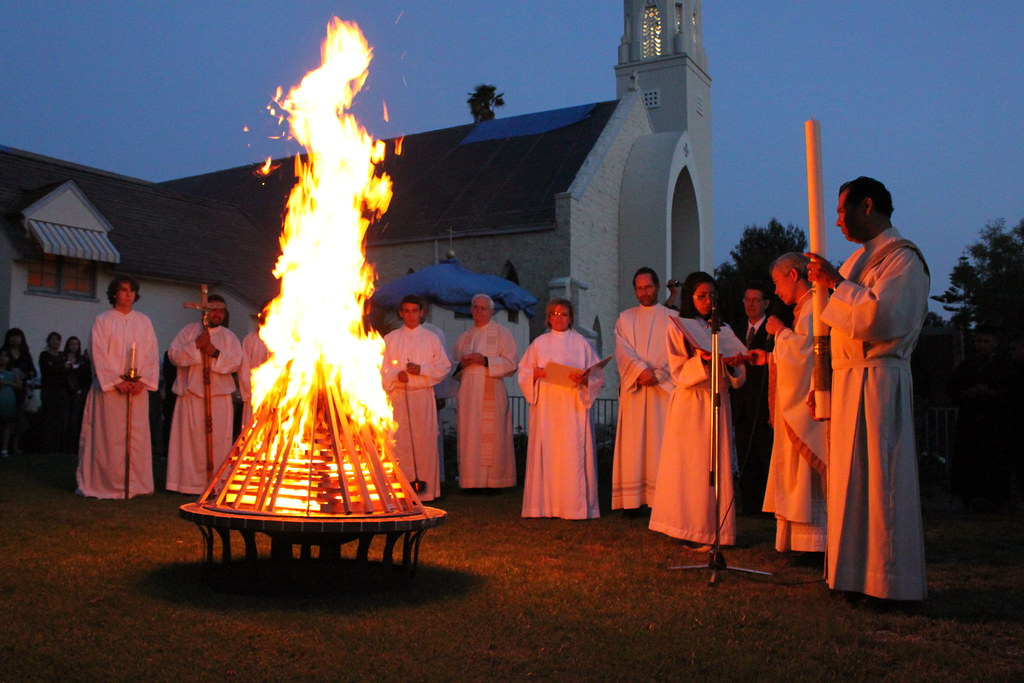
The Sundays of Eastertide
The fifty days of Eastertide are structured around seven Sundays of Easter, each with its own lectionary focus, concluding with the Day of Pentecost. Throughout the season, the first reading is drawn from the Acts of the Apostles (not the Old Testament) — a distinctive Eastertide feature that grounds the celebration of resurrection in the life of the early Church. The Gospel readings are drawn primarily from John's Gospel.
Thomas Sunday — Low Sunday
John 20:19–31 in all three years — Thomas's encounter with the risen Christ. "Blessed are those who have not seen and yet have believed." Sometimes called "Divine Mercy Sunday." The lowest-attendance Sunday of the year; the congregation that gathers is the faithful remnant.
The Emmaus Road & Resurrection Appearances
Luke 24 (Year A: Emmaus), John 21 (Year B: the lakeside breakfast), John 21 (Year C: "Do you love me?"). The resurrection appearances deepen: Christ is known in the breaking of bread, in shared meals, in the restoration of the broken.
Good Shepherd Sunday — Vocation Sunday
John 10 in all three years — the image of Christ as the Good Shepherd. Traditionally observed as Vocations Sunday. An opportunity for preaching on Christian vocation, ordination, and the pastoral care of the flock.
The Farewell Discourse Begins
John 14 begins (Year A: "I am the Way, the Truth, and the Life"). The great farewell discourses of John 14–16 carry the congregation through the final Sundays of Eastertide — Christ preparing his disciples for his departure and the coming of the Spirit.
The Commandment of Love
John 14–15 continues — "Abide in me," "Love one another as I have loved you." Rogationtide (the three days before Ascension) may be observed with prayer for the fruits of the earth and for God's blessing on creation and labour.
The Ascension of the Lord
A Principal Feast. Christ is enthroned at the right hand of the Father. White or gold vestments. Many parishes transfer the observance to the Sunday after Ascension. The sermon should resist the temptation to treat the Ascension as a departure — it is an enthronement and an empowerment.
The Sunday after Ascension — Christ's High Priestly Prayer
John 17 — Christ's prayer for the unity of his disciples. The week between Ascension and Pentecost is traditionally a week of waiting, prayer, and novena — the Church in the upper room, waiting for the promised Spirit.
Preaching in Eastertide
Eastertide calls for a preaching that is genuinely celebratory without being merely cheerful. The resurrection is not good news in the sense that everything is now comfortable — it is good news in the sense that death has been defeated, that the last enemy has been conquered, that the whole creation is now pregnant with a future it could not have imagined. Preach the resurrection as the most radical claim in human history.
The Acts readings offer the preacher a gift often neglected: the opportunity to preach through the story of the early Church — Pentecost, the healing at the Beautiful Gate, the conversion of the Ethiopian, the vision of Cornelius. These are not illustrations of the resurrection; they are the resurrection's continuing work in the world. The Acts of the Apostles is the Easter Gospel extended into history.
Hymnody for Holy Week & Easter
- "All Glory, Laud, and Honour" — The Palm Sunday processional hymn, traditionally sung as the procession enters the church.
- "My Song is Love Unknown" — Samuel Crossman's exquisite Passion meditation; one of the finest English hymns written, deeply suited to Holy Week.
- "O Sacred Head Now Wounded" — For Maundy Thursday evening, Good Friday, and Passiontide; Bach's harmonisation is the standard setting.
- "When I Survey the Wondrous Cross" — Isaac Watts's masterpiece; reserve it for the most solemn moment of the Good Friday liturgy.
- "Jesus Christ Is Risen Today" (Surrexit Christus Hodie) — The great Easter morning processional; the Alleluias return with power after six weeks of silence.
- "The Strife Is O'er, the Battle Done" (Finita iam sunt proelia) — An ancient Easter sequence, full of martial joy; deeply appropriate for the Vigil and Easter morning.
- "Thine Is the Glory" (À toi la gloire) — Handel's tune with Budry's words; perhaps the most triumphant Easter hymn in the English-language repertoire.
- "Alleluia, Alleluia, Give Thanks to the Risen Lord" — Accessible, joyful, congregational; excellent for all-age Easter worship throughout the season.
Resources for Clergy
The following resources are available to clergy of the Diocese for planning Holy Week and Easter liturgies. Contact the Diocesan office for further assistance or for guidance on any of the rites below.
- Palm Sunday — Full Liturgy of the Palms & PassionOrder of service including the procession, the Passion reading (dramatic form), and propers for all three years
- Maundy Thursday — Liturgy of the Last SupperFull order including the Washing of Feet, the Stripping of the Altar, and the Watch before the Blessed Sacrament
- Good Friday — The Liturgy of the PassionFull order: the Solemn Intercessions, the Veneration of the Cross, and the Reproaches (Improperia)
- The Easter Vigil — Complete LiturgyAll four movements: Service of Light, Liturgy of the Word (all readings), Baptismal Liturgy, and the First Eucharist of Easter
- The Exsultet — Printable & Chant NotationThe Easter Proclamation in full, with pointing for chanting and a spoken text for parishes without a cantor
- Eastertide Lectionary Grid — Years A, B & CAll Sunday propers from Easter Day through Pentecost, including the Acts readings and the Johannine Gospels