What is Confirmation?
Confirmation is the sacrament in which those baptised — whether as infants or as adults — make a personal, mature, and public affirmation of their Christian faith before the Bishop, and are strengthened for the Christian life by the laying on of hands and anointing with chrism oil.
In the Anglican tradition, Confirmation completes and deepens what was begun in Baptism. It is the moment when an individual, having been nurtured in the faith, now stands before the Church and says with their own voice: "I believe; I commit my life to Christ; I am ready to take my place as a full member of his Body."
"When the apostles in Jerusalem heard that Samaria had accepted the word of God, they sent Peter and John to Samaria. When they arrived, they prayed for the new believers there that they might receive the Holy Spirit, because the Holy Spirit had not yet come on any of them; they had simply been baptized in the name of the Lord Jesus. Then Peter and John placed their hands on them, and they received the Holy Spirit."
— Acts 8:14 - 17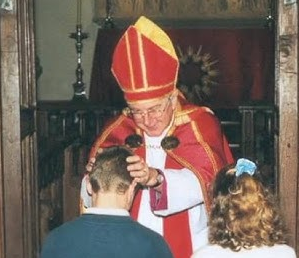
The Anglican Understanding of Confirmation
The Anglican Church of Southern Africa, following the classical Anglican formularies, understands Confirmation as a rite closely connected to Baptism. The Book of Common Prayer describes it as the occasion when candidates "ratify and confirm" their baptismal promises — promises made on their behalf as infants, which they now own for themselves.
In the Diocese of False Bay, Confirmation is administered by the Bishop — the chief pastor of the diocese — as a sign of the unity of the Church and the apostolic continuity of the laying on of hands. It is at Confirmation that candidates are received as full communicant members of the Anglican Church and are welcomed to take their full part in the life of the congregation.
Anglicanism recognises that those who come to faith as adults and are baptised may be Confirmed at the same service or shortly thereafter, completing their full initiation into the Body of Christ in a single occasion.
The Seven Gifts of the Holy Spirit
The Church has traditionally understood Confirmation as the occasion on which the sevenfold gifts of the Holy Spirit are particularly invoked over the candidates, drawn from Isaiah 11:2–3:
Wisdom
To see life and all things in the light of God — to choose what is truly good and lasting.
Understanding
To grasp the truths of the faith more deeply and to know God's will for one's life.
Counsel
To make right judgements in difficult situations, guided by the Spirit rather than self-interest.
Fortitude
Courage and strength to live the faith boldly, even in the face of hardship or opposition.
Knowledge
To know God truly — not just facts about him, but a living, personal encounter with the divine.
Piety
A reverent, heartfelt devotion to God — expressed in prayer, worship, and love of neighbour.
Fear of the Lord
Not terror, but a holy awe and wonder before God — the beginning of all wisdom and reverence.
Who May Be Confirmed?
Young People
Candidates baptised as infants are typically prepared for Confirmation in their teenage years, though there is no fixed age requirement. The key is that the candidate must be able to make a genuine personal profession of faith — understanding what they are committing to, and doing so freely and sincerely. Most parishes offer Confirmation preparation to young people from around the age of 13 or 14 upward.
Adults
Adults who were baptised but never Confirmed, or who come to Anglican faith from another Christian tradition, are warmly welcomed to prepare for Confirmation. This includes those received into the Anglican Communion from Roman Catholic, Lutheran, Methodist, or other backgrounds who have not previously been confirmed by a bishop in the apostolic succession.
Reception into the Anglican Communion
Those previously confirmed in another part of the Christian Church may be received into the Anglican Communion by the Bishop through a rite of Reception rather than Confirmation. The Bishop will advise on the appropriate rite in each case.
Preparing for Confirmation
Preparation for Confirmation is a significant and joyful time of deepening faith. The Diocese of False Bay encourages thorough preparation through the parish:
-
Speak to your parish priestExpress your desire to be Confirmed. The priest will advise on the preparation programme available in your parish and the expected timeline.
-
Attend Confirmation classesA course of instruction covering the Christian faith, the Anglican tradition, the sacraments, prayer, and life in the Church. These classes are offered by the parish and typically run over several months.
-
Register with the DioceseYour parish will submit your name to the Bishop's office in preparation for the Confirmation service. The Bishop's chaplain will coordinate the date and venue.
-
The Bishop's visitConfirmation is administered at a service presided over by the Bishop of False Bay (or a visiting Bishop acting on his behalf). These services take place at parishes throughout the diocese during the year.
-
The Confirmation ServiceThe service follows the rite of the Anglican Prayer Book. Candidates renew their Baptismal promises, are anointed with chrism, and receive the laying on of hands from the Bishop.
What to Bring
- Completed Confirmation registration form (provided by your parish)
- Proof of Baptism — your baptismal certificate or record
- Completed preparation classes (as confirmed by your parish priest)
- A Confirmation sponsor — a mature, practising Christian who will support you in your ongoing faith journey
- Smart, respectful dress for the occasion — white is traditional but not required
Confirmation and the Life of the Church
Confirmation is not an ending — it is a commissioning. Having been confirmed, the strengthened Christian is sent out to take their full part in the mission and ministry of the Church: serving in ministry, giving of themselves financially, participating in the governance of the parish, and bearing witness to Christ in everyday life.
In the Diocese of False Bay, Confirmation marks the moment when a Christian is counted among the full communicant members of the Church — those eligible to receive Holy Communion (if not already), to vote at vestry meetings, and to offer themselves for lay ministry and leadership.
"For this reason I remind you to fan into flame the gift of God, which is in you through the laying on of my hands. For God gave us a spirit not of fear but of power and love and self-control."
— 2 Timothy 1:6–7The Role of the Bishop
In Anglican practice, it is the Bishop — and ordinarily the Bishop alone — who confirms. This is not a matter of mere custom but of deep theological significance. The Bishop is the chief pastor and teacher of the diocese, the successor to the apostles in the ministry of the Church. By receiving Confirmation from the Bishop, each candidate is personally welcomed into the apostolic community and publicly acknowledged as a member of the one, holy, catholic, and apostolic Church.
The Bishop of False Bay tours the parishes of the diocese regularly to administer Confirmation, and the occasion is always a joyful celebration for the whole congregation.