What is Epiphanytide?
Epiphanytide is the season of the Church's year that begins on the Feast of the Epiphany (6 January) and extends until the eve of Ash Wednesday. Its length varies from year to year depending on the date of Easter — it may be as short as four weeks or as long as nine — but its character remains constant: it is the season of manifestation, of light breaking through, of Christ being revealed in ever-widening circles to the world.
The Greek word epiphania means "appearance" or "manifestation." In this season, the Church meditates on the ways in which Jesus is made known — to the Gentile Magi, at his Baptism in the Jordan, at the Wedding at Cana, in the Sermon on the Mount, and through the gradual revelation of his identity to his disciples. Epiphanytide is the season of growing light: each week the candle burns a little brighter, and we see a little more of who this Christ truly is.
"The people walking in darkness have seen a great light; on those living in the land of deep darkness a light has dawned."
— Isaiah 9:2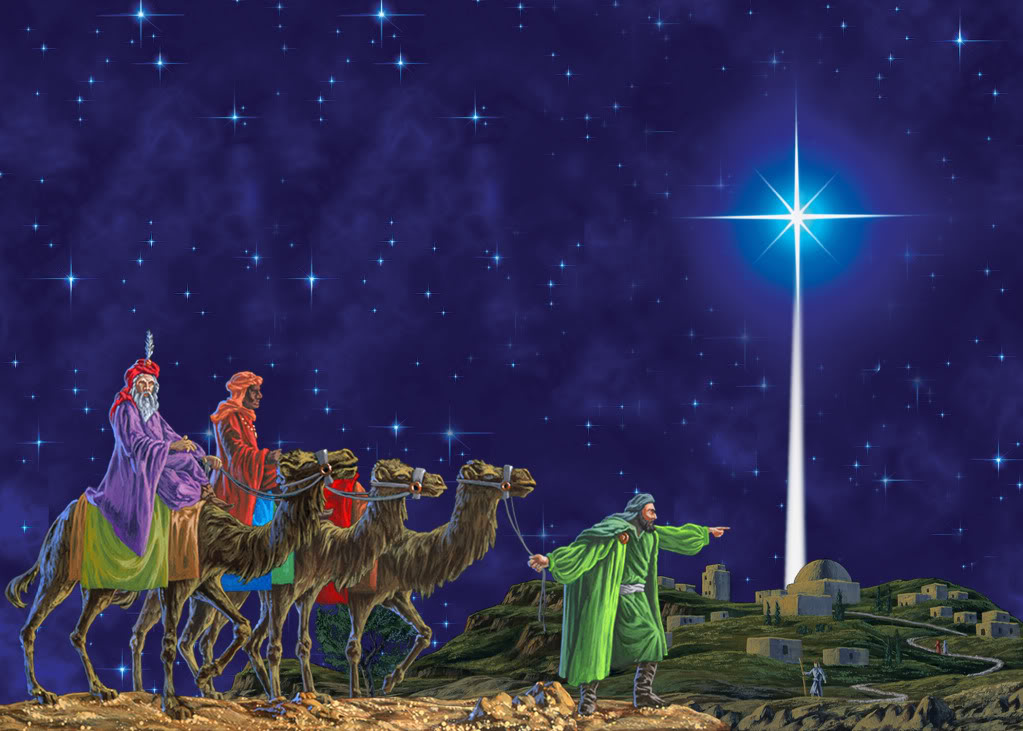
Liturgical Colour: White and Green
Epiphanytide uses two liturgical colours. The Feast of the Epiphany itself (6 January) and the Sunday of the Baptism of Christ are celebrated in white, continuing the festal tone of Christmastide. From the second Sunday after Epiphany, the season moves into green — the colour of growth, life, and the ordinary faithful walking of the Christian life — until the final Sunday, the Transfiguration, which returns to white.
White
Feast of the Epiphany (6 Jan) and Baptism of Christ Sunday — festal continuation
Green
Sundays after Epiphany (from the 2nd Sunday onward) — growth and unfolding ministry
White or Gold
The Transfiguration (last Sunday before Lent) — the blazing revelation of Christ's glory
The Three Great Epiphany Manifestations
The liturgical tradition of both East and West has long celebrated three foundational moments of Christ's manifestation that together define the season's theological content. Understanding these three moments gives preachers and liturgical planners the framework for the whole of Epiphanytide.
The Visit of the Magi
Gentile wise men — the nations of the world — are drawn by starlight to worship the Jewish Messiah. Christ is revealed as the Saviour of all peoples, not of Israel alone. This is the very heart of the Epiphany feast.
The Baptism of Christ
The Father's voice, the Spirit's descent, the Son's anointing — the Holy Trinity is revealed at the Jordan. Jesus is publicly declared the Beloved Son and his messianic ministry begins. Celebrated on the Sunday after Epiphany.
The Wedding at Cana
The first sign: water becomes wine, abundance replaces scarcity, and the disciples begin to believe. This miracle is the paradigm of the Epiphany season — the hidden glory of Christ breaking through into the ordinary.
The Sundays of Epiphanytide
The Sundays after the Epiphany trace the growing revelation of Christ's identity and mission. Each lectionary year (A, B, C) offers a different angle on this unfolding manifestation, but the movement from Magi to Baptism to Ministry to Transfiguration is consistent across all three years.
The Feast of the Epiphany
The principal feast of the season. The Magi arrive; gold, frankincense, and myrrh are offered. White vestments. This day should be observed with full festivity — it is the culmination of the Christmas-Epiphany arc and ought not to be quietly passed over.
The Baptism of Christ
White vestments. The Jordan theophany: the Trinity revealed, the Beloved Son declared. A natural occasion for the renewal of baptismal vows and for catechesis on the meaning and grace of Holy Baptism.
The Wedding at Cana & First Disciples
Green vestments begin. The first sign at Cana (John 2) or the calling of the first disciples. The ministry of Jesus begins to take visible shape. The theme of vocation — and of abundance replacing scarcity — is prominent.
Christ's Ministry Unfolds
Green vestments throughout. Readings from the Sermon on the Mount (Year A), healings and exorcisms (Year B), or the Nazareth Manifesto and early Galilean ministry (Year C). The character and priorities of the Kingdom become clear week by week.
The Transfiguration of Our Lord
White vestments. The blazing revelation of Christ's divine glory on the mountain, immediately before the turn toward Jerusalem and the Cross. The hinge between Epiphanytide and Lent — the last great light before the long fast begins.
Preaching in Epiphanytide
Epiphanytide invites a particular kind of preaching: exploratory, attentive, wondering. This is the season of growing sight — the congregation is invited to look more closely at Jesus, to notice who he is, and to be surprised by what they find. The great danger of Epiphany preaching is to domesticate Christ, to make him too familiar and too safe. The Jesus of the Gospels in Epiphanytide is strange, startling, and radically compelling.
The Baptism of Christ and congregational baptism
The Sunday of the Baptism of Christ is an excellent occasion for the renewal of baptismal vows and for catechesis on the meaning of baptism. This is especially fitting in parishes where baptisms are infrequent — the congregation needs to be regularly recalled to their own baptismal identity as those in whom Christ dwells and through whom Christ acts.
The Sermon on the Mount (Year A)
In Year A, the Sundays of Epiphanytide after the Baptism move through the Sermon on the Mount — the Beatitudes, salt and light, the antitheses ("You have heard it said... but I say to you"), and the deeper righteousness of the Kingdom. This sequence offers a magnificent extended preaching series. Clergy are encouraged to treat it as a sustained journey rather than a series of isolated Sunday topics.
The Transfiguration as threshold
The final Sunday — the Transfiguration — is a hinge moment. Peter, James, and John see the glory of Christ on the mountain, and immediately he sets his face toward Jerusalem. Preach it as both a moment of gift — God showing us who Jesus is before the darkness comes — and a moment of vocation: to come down the mountain and follow the Son of Man toward the Cross.
"His face shone like the sun, and his clothes became as white as the light... 'This is my Son, whom I love; with him I am well pleased. Listen to him!'"
— Matthew 17:2, 5Epiphany and the Mission of the Church
Epiphanytide carries a powerful missiological charge. The season opens with Gentiles — outsiders, foreigners, those far from the covenant — being drawn to Christ by God's own initiative. This is not incidental to the feast; it is the feast. Christ is revealed to the nations. The Church that celebrates Epiphany cannot be inward-looking.
Many parishes find the Epiphany season a fruitful time to focus on the Church's outward-facing ministry: evangelism, cross-cultural partnerships, and global Anglican links. The Diocese of False Bay's own global community connections are a tangible expression of this Epiphany theology — Christ being made known across borders and cultures, as the Magi once crossed the desert to find him.
Hymnody & Music
- "We Three Kings of Orient Are" — The classic Epiphany processional. Each verse interprets one of the three gifts theologically; a superb teaching hymn for all ages.
- "Brightest and Best of the Sons of the Morning" — Heber's luminous Epiphany hymn, evoking the star and the offerings of the Magi with great lyrical beauty.
- "Songs of Thankfulness and Praise" — A superb Epiphanytide season hymn that moves through all three classical manifestations (Magi, Jordan, Cana) verse by verse.
- "Jesus, the Light of the World" — Particularly suited to all-age worship and to the light imagery that pervades the entire season.
- "'Tis Good, Lord, to Be Here" — The great Transfiguration hymn; reserved for the final Sunday before Lent begins.
Resources for Clergy
The following resources are available to clergy of the Diocese for planning and preparing Epiphanytide worship. Contact the Diocesan office for further assistance or to request additional materials.
- Epiphany Proclamation & House Blessing Rite (Chalking of the Door)The traditional C+M+B blessing with prayers for household consecration at the Feast of the Epiphany
- Lectionary Grid: Epiphanytide Years A, B & CAll Sunday propers from the Feast of the Epiphany through the Last Sunday before Lent (Transfiguration)
- Baptismal Renewal Liturgy — Baptism of Christ SundayAn order for the renewal of baptismal vows within the Sunday Eucharist, keyed to the Jordan theophany narrative
- Sermon on the Mount Preaching Series Guide (Year A)A six-week framework with exegetical notes for the Matthean Sundays of Epiphanytide
- Transfiguration Sunday — Liturgical Notes & IntercessionsResources for the Last Sunday before Lent, with a brief commentary on the three synoptic accounts